Choose patient feedback software your team can put to work.
The right questions help you see beyond a polished dashboard. Start with the people contributing, the team listening and the response you want to make possible.

Six questions for your evaluation.
Use these questions with any supplier, including PulseMD. Ask to see the workflow, then agree what your service needs.
Can people contribute in a way that works for them?
Try the experience on a phone, with a short comment and a longer story. Ask about voice, text, ratings and structured surveys. Check accessibility, language support and assistance in the actual workflow you will use.
In the demonstration: Ask the supplier to demonstrate a complete contribution, including the receipt and what the person is told about privacy.
Will we understand the context behind a score?
A rating can help you see a pattern. An explanation can help you understand it. Check whether teams can review the questions, collection setting and original responses appropriate to their access.
In the demonstration: Bring one of your real service questions and ask how the team would investigate the answers.
What happens after we hear a concern?
Look beyond the dashboard. Someone needs to review the issue, take responsibility, agree the next step and check whether the response helped.
In the demonstration: Follow an example from feedback to owned work, review and a contributor-facing update.
Are feedback and private care clearly separated?
Open service feedback and identified care check-ins serve different purposes. People should understand who can read their information and how it will be used.
In the demonstration: Ask for a demonstration of participation wording, staff access and the boundary between service learning and private care.
Can we see who was heard, and who was missing?
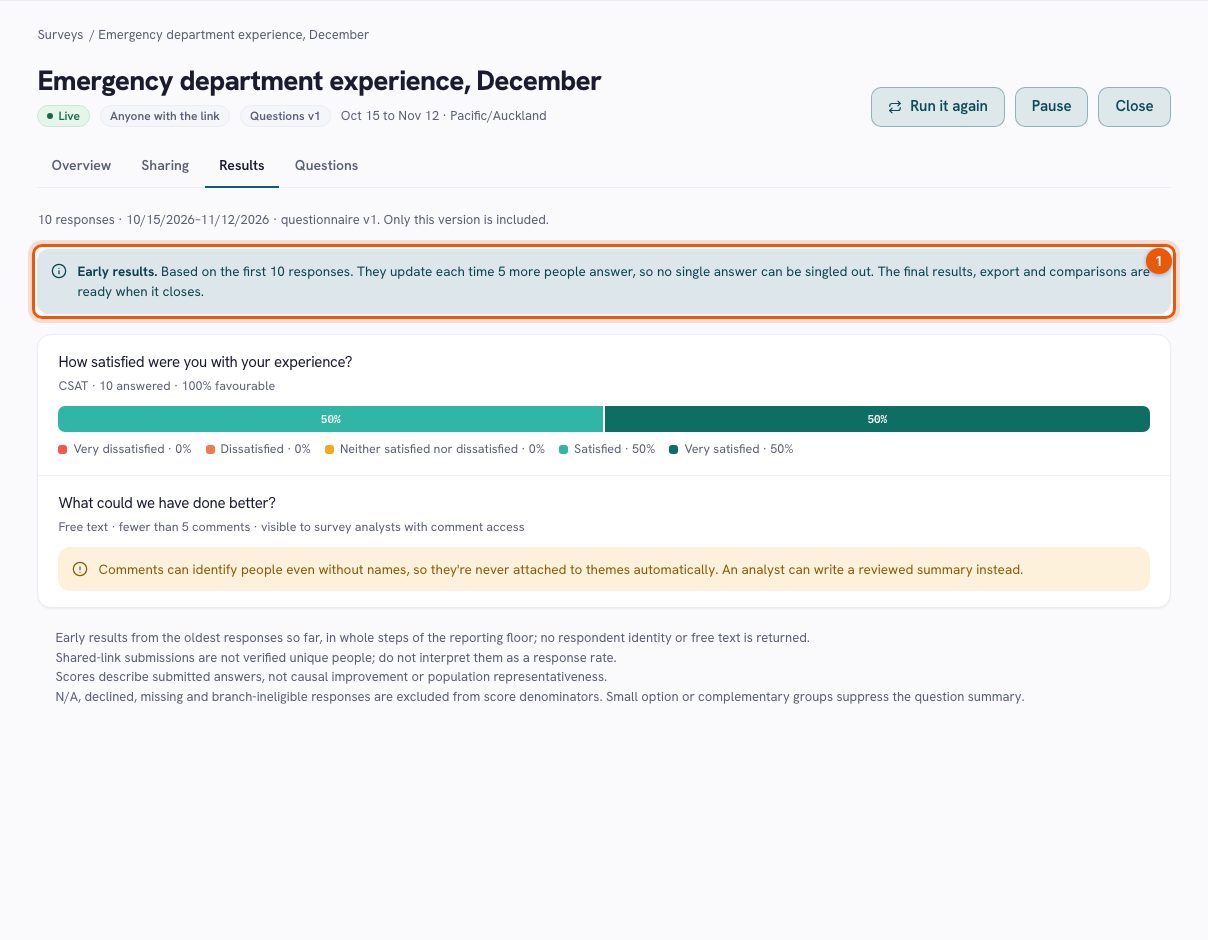
A change in scores is easier to misread without participation and timing. Check how missed answers, changing cohorts and repeated measures are represented.
In the demonstration: Ask how the software defines a response rate and which people are included in a before-and-after comparison.
Does implementation fit the team's working day?
Agree ownership, review coverage, hosting, data agreements and any required connections. Establish which capabilities are available now and what configuration or integration work is needed.
In the demonstration: Request a written scope with responsibilities, dependencies, success measures and a review date.
Ask to see the work after the survey.
Results are useful when the people responsible can understand them and carry the next step forward.
Start small enough to learn.
Choose one service and a clear question. Define who will contribute, who will review responses and what will happen next. At the review, consider participation, the team's workload, the actions taken and what you still need to understand. A completed task alone is not evidence that care improved.
Bring the questions that matter to your service.
We will walk through the product with your team and make the scope, responsibilities and next steps clear.
A relevant walkthrough. A practical conversation. No pilot commitment. · Explore the Trust Center