Turn feedback into improvement work your team can follow.
Your team wants to make care better. Help them carry an issue through the everyday work of understanding it, taking responsibility, making a change and checking what happened.
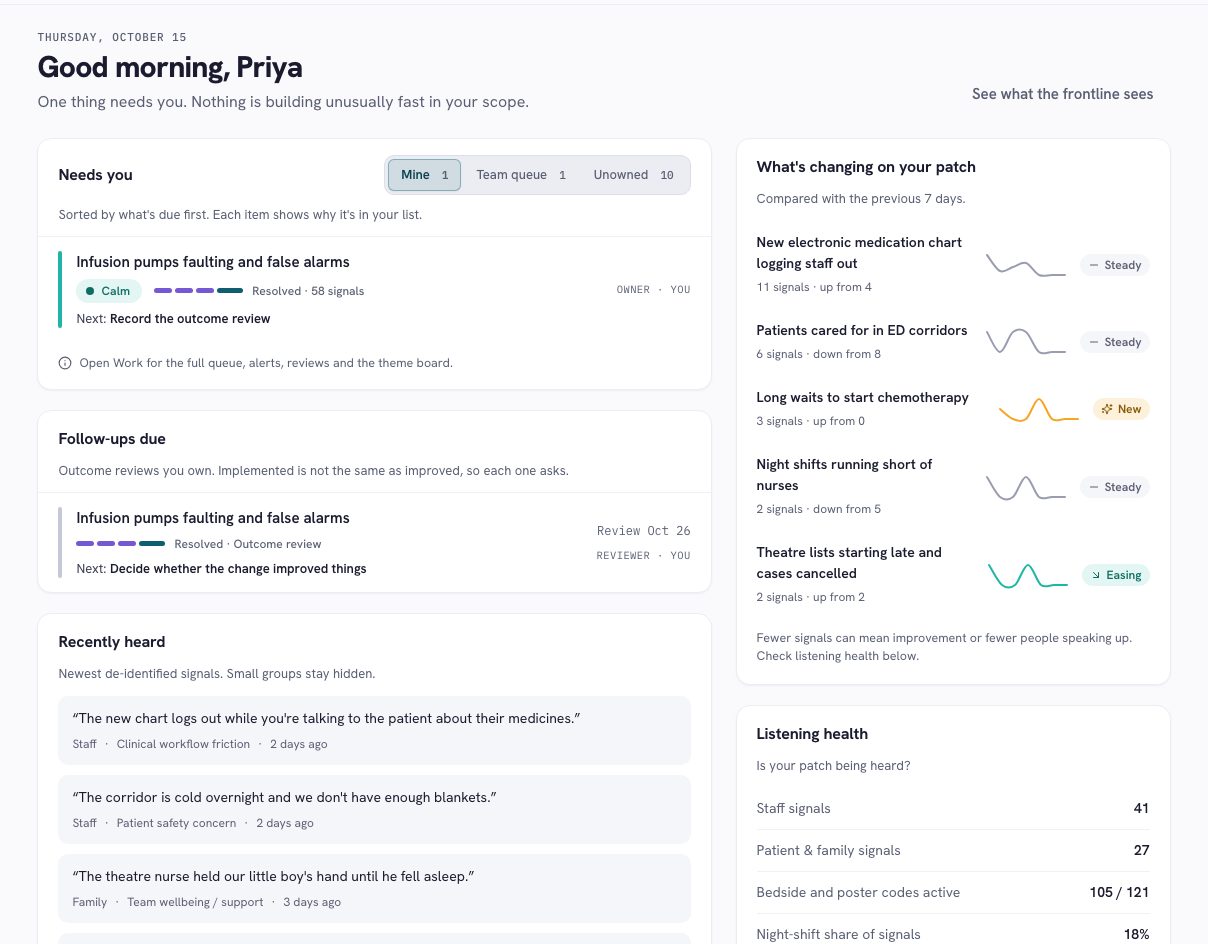
Know what needs you. And who is doing what.
An issue shouldn’t depend on someone keeping it in their head. Give the response an owner, tasks and a due date, with the evidence beside it.
- Less chasing for updates. See what is waiting, underway and due for review.
- Less rebuilding the story. Keep the original issue and supporting observations connected to the work.
- A clearer next conversation. Review whether the change helped, then prepare an approved update for the people who contributed.
Read the film transcript
An equipment problem may start as one observation. When it keeps happening across shifts, a team needs to see the pattern and decide what to do next. This is a demonstration of PulseMD using fictional people and illustrative data. Here, the issue is infusion pumps faulting and giving false alarms. The theme brings related observations into one place. We can see the issue, the people who raised it, and the work already under way. Open the supporting signals to hear the detail. Staff describe pumps stopping during infusions, equipment that is difficult to find in working order, and faults that need attention. Those words give the team context for a decision. In this showcase, theme naming uses a curated demonstration assist. The useful story is how people review the issue and follow it through. On the overview, responsibility is visible. Priya owns the work. The intended result is specific: infusions running without false alarms or failures. The completed tasks record the practical steps, including agreeing the swap with biomedical engineering and training charge nurses on the new pumps. Next, look at the improvement work and its review. Finishing a task and checking its effect are separate steps. The record keeps the change, evidence and review together, so another person can understand what happened and what still needs attention. The timeline also includes a frontline update. It connects what staff reported with the team's response. These are illustrative results, rather than evidence of customer impact. A fall in signals still needs interpretation: fewer reports can reflect a change in the service, or a change in who is speaking up. That is the path PulseMD makes visible: a shared observation, a reviewable theme, owned work and a considered update. Hear what matters. Follow through on care.
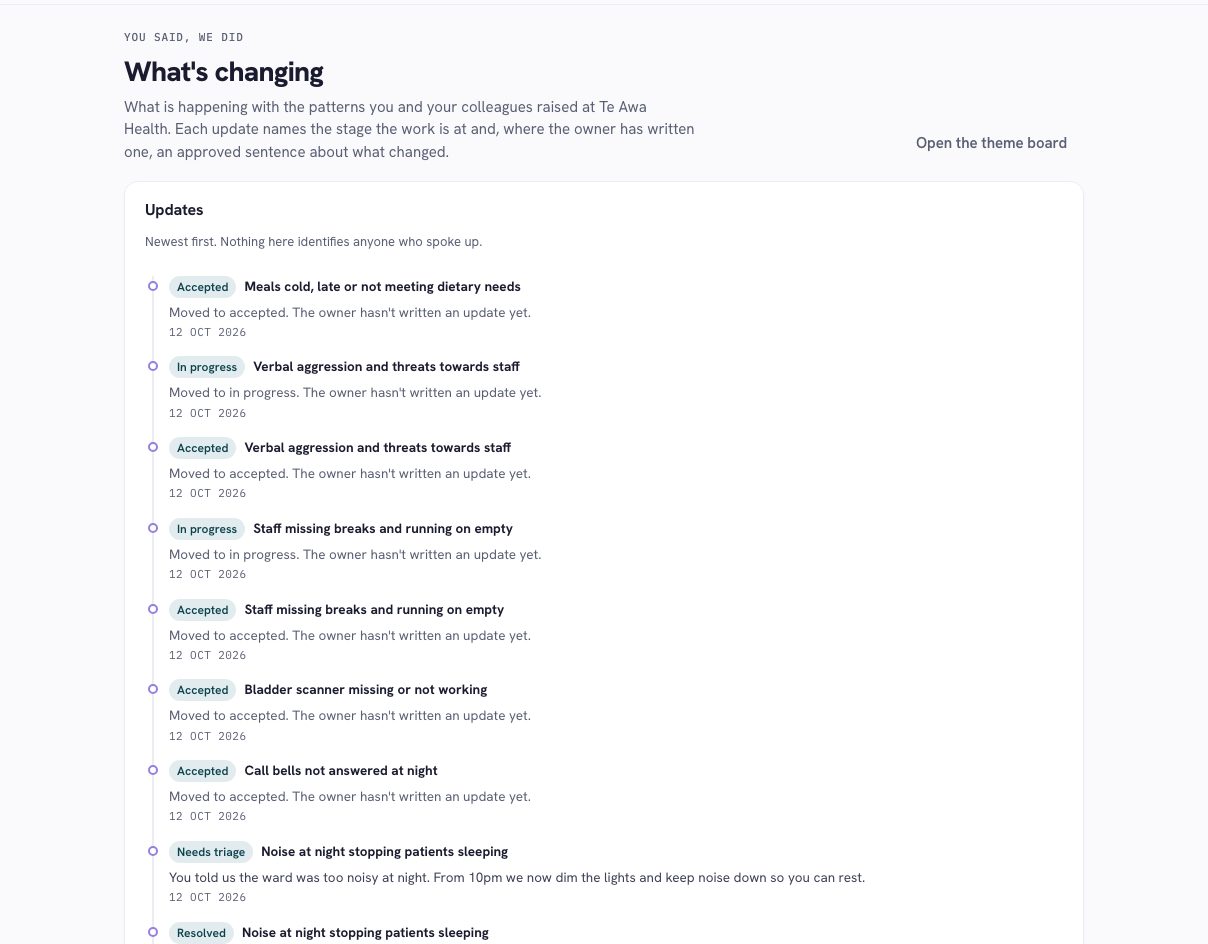
Keep the thread from what was heard to what was done.
Start with the issue, and its evidence
Keep the reviewed theme and supporting observations in view. Record the problem you are working on and the change you want to understand.
Make responsibility clear
Assign owners, agree tasks and set due dates. Give the team a shared view of what is waiting, underway or ready for review.
Return to the question that started it
Record evidence and review the change. Completing a task and knowing whether it helped are different parts of improvement.
Tell people what happened next
Prepare an approved service update. Let the people who contributed see the response, and keep listening to what they experience afterwards.
Know what to expect.
Is this only for concerns?
No. Teams can also explore positive practice: what happened, why it helped and whether it could be repeated elsewhere.
Does closing work prove an improvement?
No. Task completion records work done. A review considers evidence about what changed, including what people reported afterwards.
Who sees an update?
Internal work and service-facing updates have different audiences. Teams review and approve the appropriate communication before sharing it.
Does this replace incident reporting?
Keep established incident, safeguarding, complaints and emergency routes in place. PulseMD supports listening and improvement alongside those responsibilities.
Good intentions deserve a clear way forward.
Start with one issue your team wants to understand. We’ll show you how to follow it from the first observation to a reviewed response.
A relevant walkthrough. A practical conversation. No pilot commitment. · Explore the Trust Center