Hear what residents and families notice now, not what they can still remember later.
Residents and families see the continuity of care. Staff see the conditions around it. PulseMD brings those signals together as early intelligence for the people running your homes.
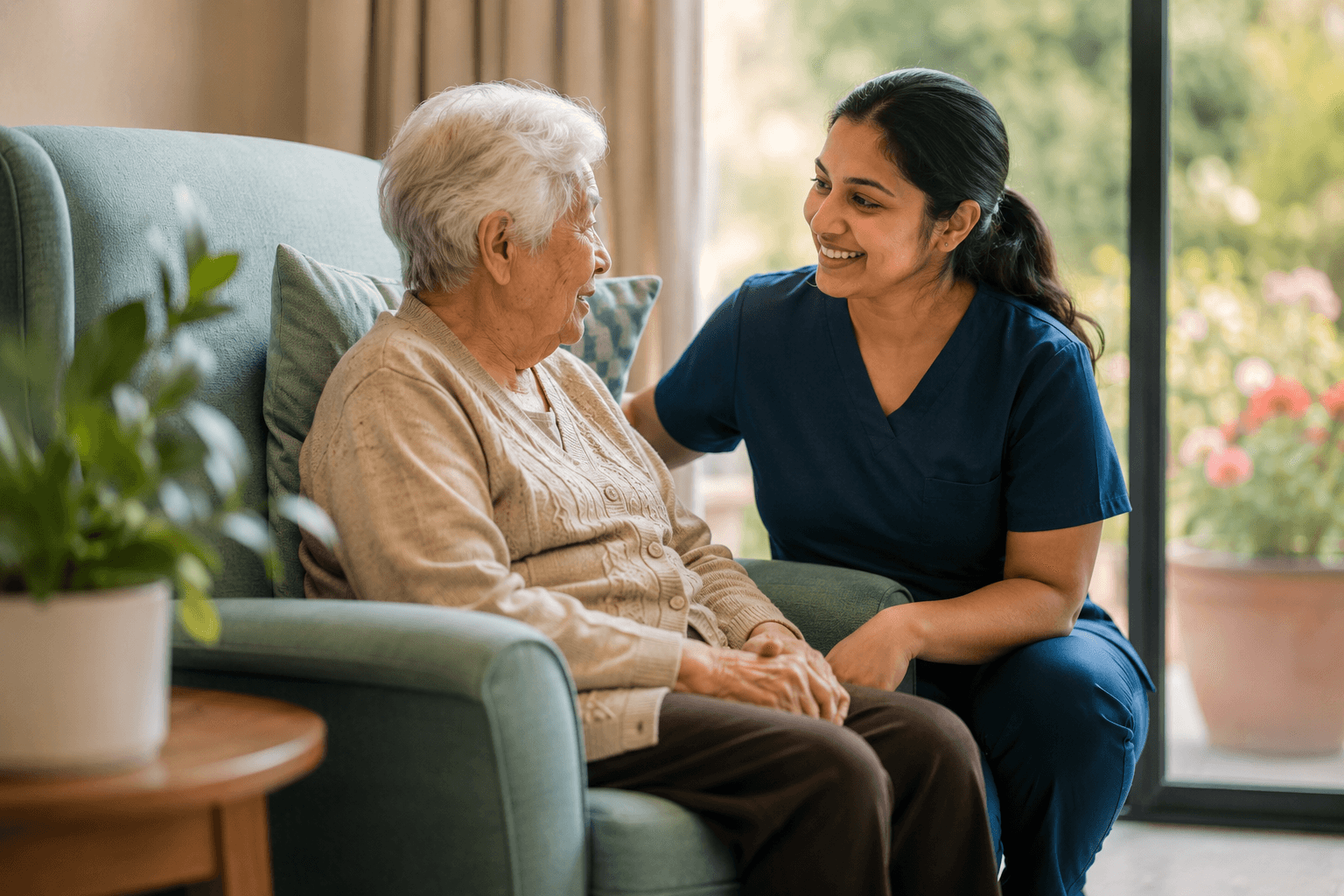
What becomes visible when people can share the moment.
A lightweight route for residents and families to share concerns, changes and good care while the context is still intact.
Changing wellbeing
A difference in mood, routine, comfort or participation noticed before the next formal review.
Communication
Conflicting answers, unexplained changes and gaps between what was expected and experienced.
Dignity and choice
Whether people were heard, included and given time to express what mattered to them.
Good care
Patience, kindness and sound judgement worth recognising and deliberately repeating.
Your team knows when something is off.
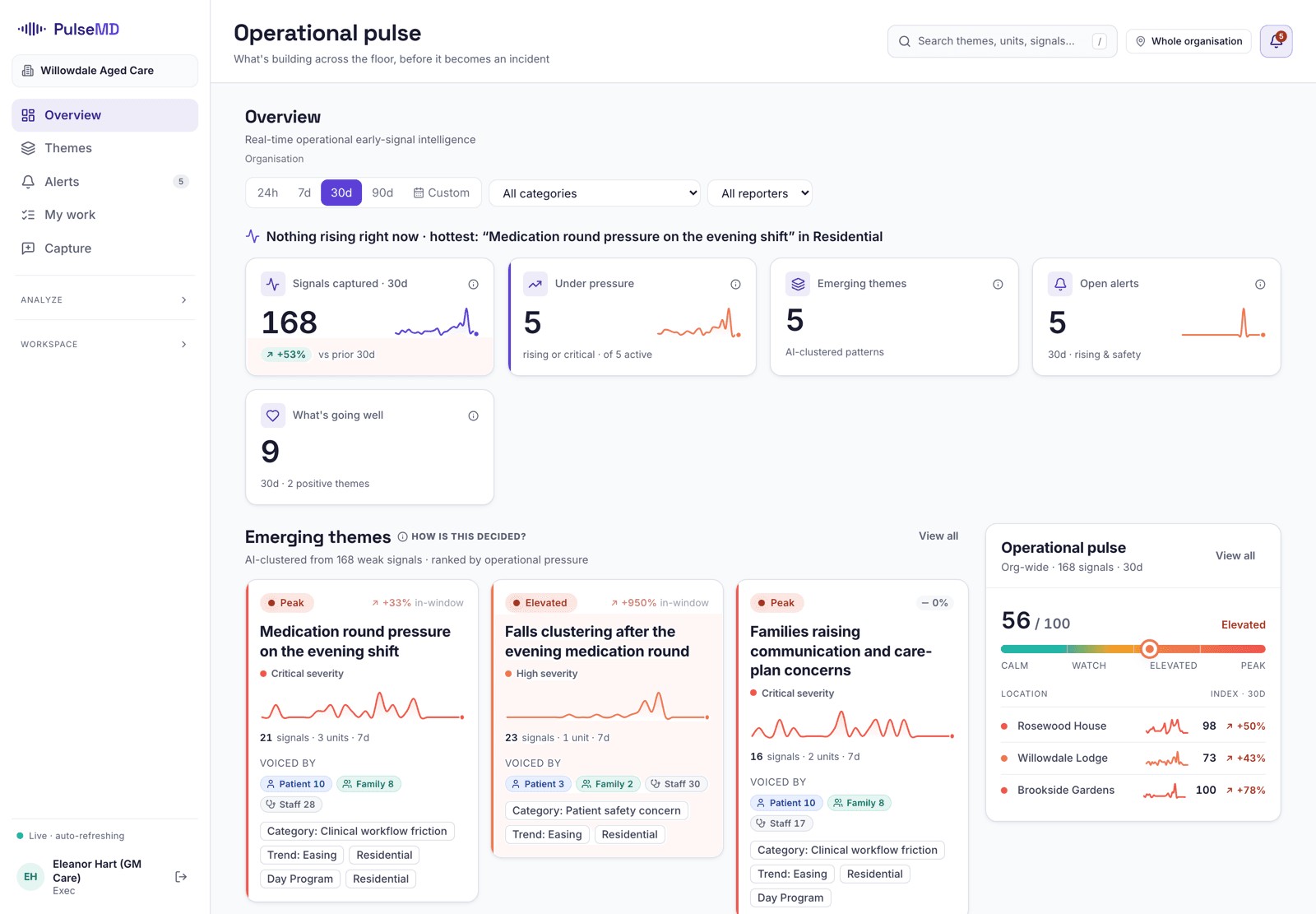
The resident who’s quieter than usual, a little less steady on their feet, off their food. Those quiet reads are the first warning of a fall, a decline, or a family that’s starting to worry. PulseMD turns what your care staff and nurses notice into something the home can see and act on early, long before it hardens into an incident or a complaint.
What your teams notice before it’s on a form
The inside operational context your care staff and nurses see first, brought alongside residents and families experience.
- Falls and near-falls, and the conditions behind them
- Skin integrity and wound concerns mentioned in passing
- Medication-round and staffing pressure on night shift
- Families’ worries about communication and coordination
- Concerns about restrictive practices
Built for your home, in your language.
Patient, client or resident experience leads. Staff signal adds context. Repeated observations become a leadership pattern in the words your community uses.
See across every home
Compare emerging pressure and themes across your homes, and find which workflows explain the difference.
Resident and family voice
A lightweight, dignified way for residents and families to share what they notice, heard early, never used to score an individual.
Evidence for continuous improvement
Turn scattered observations into clear, de-identified patterns that support quality, accreditation and a strong speak-up culture.
De-identified evidence your teams can take to CMS, The Joint Commission and your state health department.
Solutions for this setting
Workforce strain & retention
Pressure accumulates silently. By the time it shows up in a vacancy rate or an engagement survey, the cost is already paid.
ExplorePatient-safety early signals
The most important safety signals are judged too small to log, too uncertain to report, so the early warning is lost and the near-miss goes untracked.
ExplorePatient & family voice
Patients, clients, residents, families and friends see the continuity of care across days, months and years. But formal processes ask them to save up what happened, after details soften, confidence fades and good care has gone unrecorded.
ExploreHear what people notice now, not what they can still remember later.
Start with patient and family voice in one setting, or combine it with staff signal from the beginning. Minimal-to-no integration, no workflow redesign and an honest pilot plan.
A senior member of our team responds the same business day. · Explore the Trust Center